The short version
- 1VRF systems reward preventive maintenance. Small issues on one indoor unit can affect the whole refrigerant circuit.
- 2Monthly filter cleaning, quarterly coil and drain checks, and a yearly outdoor unit deep clean is a sensible baseline.
- 3Watch the error log on the central controller. It is your early-warning system.
- 4Keep a record of pressures, currents and error codes. Trends matter more than single readings.
Variable Refrigerant Flow systems (sold as VRV by Daikin and VRF by most other brands) have become the default choice for mid-size offices, retail chains and showrooms. One outdoor unit bank can run dozens of indoor units, each with its own temperature control, and energy savings over conventional ductable systems can be significant.
But we've also seen what happens when a VRF system is installed and then left alone for three years. Because everything shares one refrigerant circuit, neglect on a few indoor units shows up as a problem for the whole system.
A realistic maintenance schedule
| Frequency | Task | Who |
|---|---|---|
| Monthly | Clean indoor filters; check for unusual noise or water marks | In-house facility team |
| Monthly | Review error history on the central controller | In-house or AMC partner |
| Quarterly | Indoor coil check, drain line flush, drain pump test | AMC technician |
| Quarterly | Outdoor coil inspection; clear debris from fins | AMC technician |
| Half-yearly | Electrical terminal tightening; check PCB and sensor health | AMC technician |
| Yearly | Outdoor unit deep clean; operating pressure and current log; insulation audit | AMC technician |
The central controller is your best friend
Most VRF systems log error codes: communication faults, sensor errors, high-pressure trips, drain alarms. Facility teams often reset them and move on. Don't. Write down every code, the date and the unit address. A sensor error that appears once a week in March often turns into a compressor protection trip in May.
Common VRF problems we're called for
- Individual rooms not cooling while others are fine, often a blocked filter, a faulty expansion valve or a sensor issue on that indoor unit.
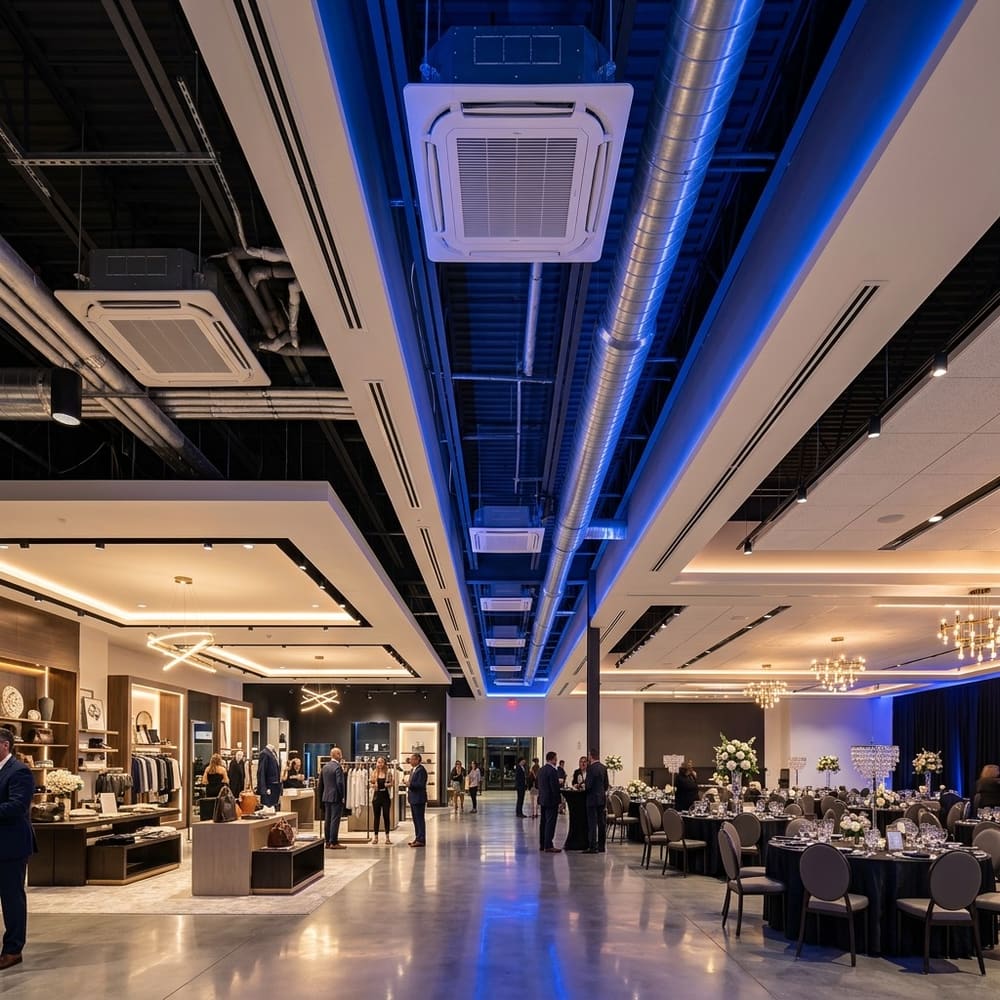
- Drain alarms on cassette units, usually a clogged drain or failed pump.
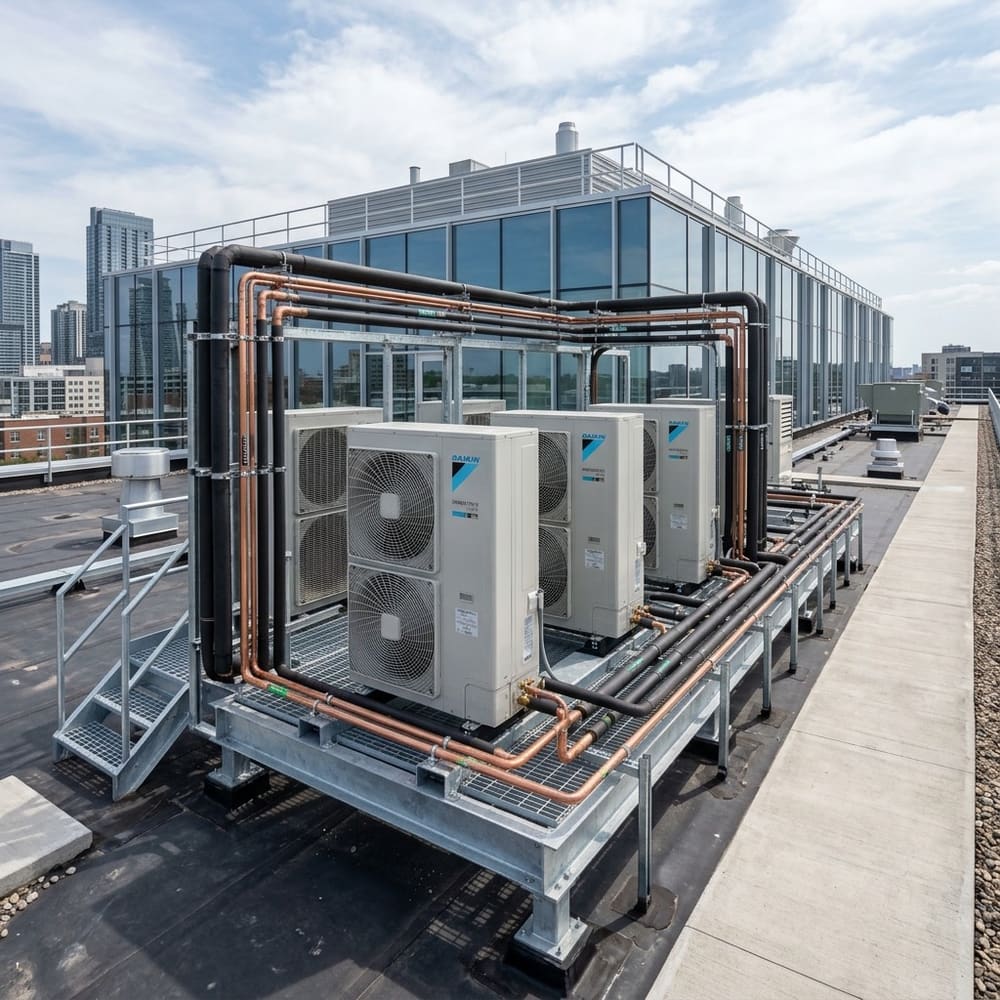
- High-pressure trips in summer, caused by dirty outdoor coils or poor airflow around the rooftop units.
- Communication errors from loose or damaged control wiring, often after unrelated electrical or interior work.
- Gradual capacity loss, typically a slow refrigerant leak somewhere in the long pipe network.
Outdoor units need space to breathe
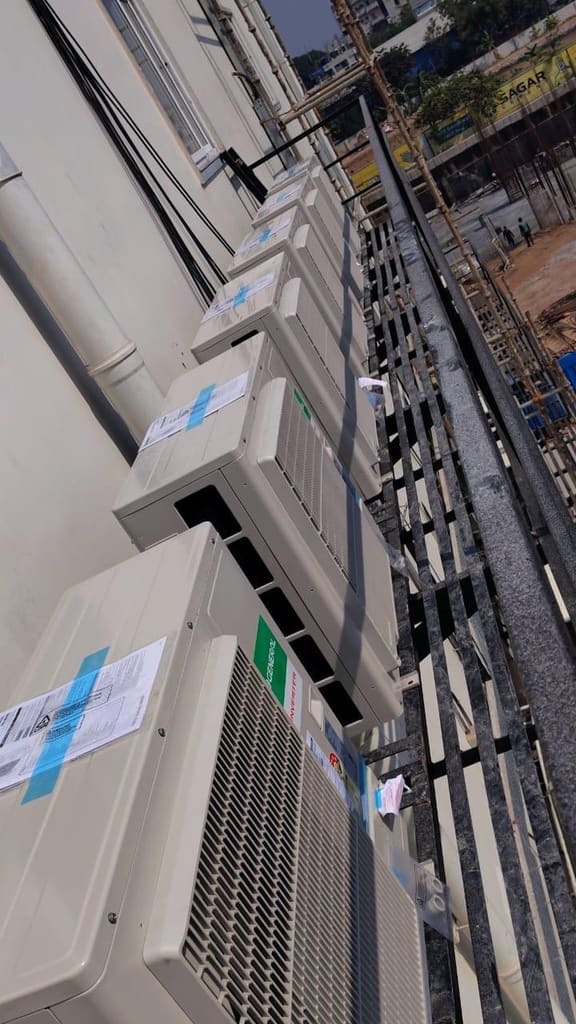
Rooftop plant areas tend to fill up with other things: DG sets, water tanks, signage structures. Every obstruction near the condenser fans raises discharge pressure. Keep the manufacturer's recommended clearances, and make sure hot air from one bank isn't being sucked into the next.
Plan for maintenance at the design stage
The best maintenance programme in the world struggles if the indoor units are buried in a sealed gypsum ceiling with no access panels. If you're fitting out a new space, insist on service access for every indoor unit and a safe route to the rooftop outdoor units. We raise this with architects and interior teams on every project we're involved in early.
A VRF system is only as good as its worst-maintained indoor unit.
Sri Engineering Works project team

Proprietor, Sri Engineering Works. Sri Engineering Works has installed and maintained HVAC systems across Telangana and Andhra Pradesh since 2018, from home splits to VRF plants and chillers.