
The short version
- 1Condenser tube fouling is the silent efficiency killer in water-cooled chillers. Clean the tubes yearly and treat the water continuously.
- 2Log approach temperatures. Rising approach tells you tubes are fouling before the power bill does.
- 3Chilled water setpoints and pump speeds are often left at commissioning defaults for years. Review them.
- 4Cooling towers deserve as much attention as the chiller itself.
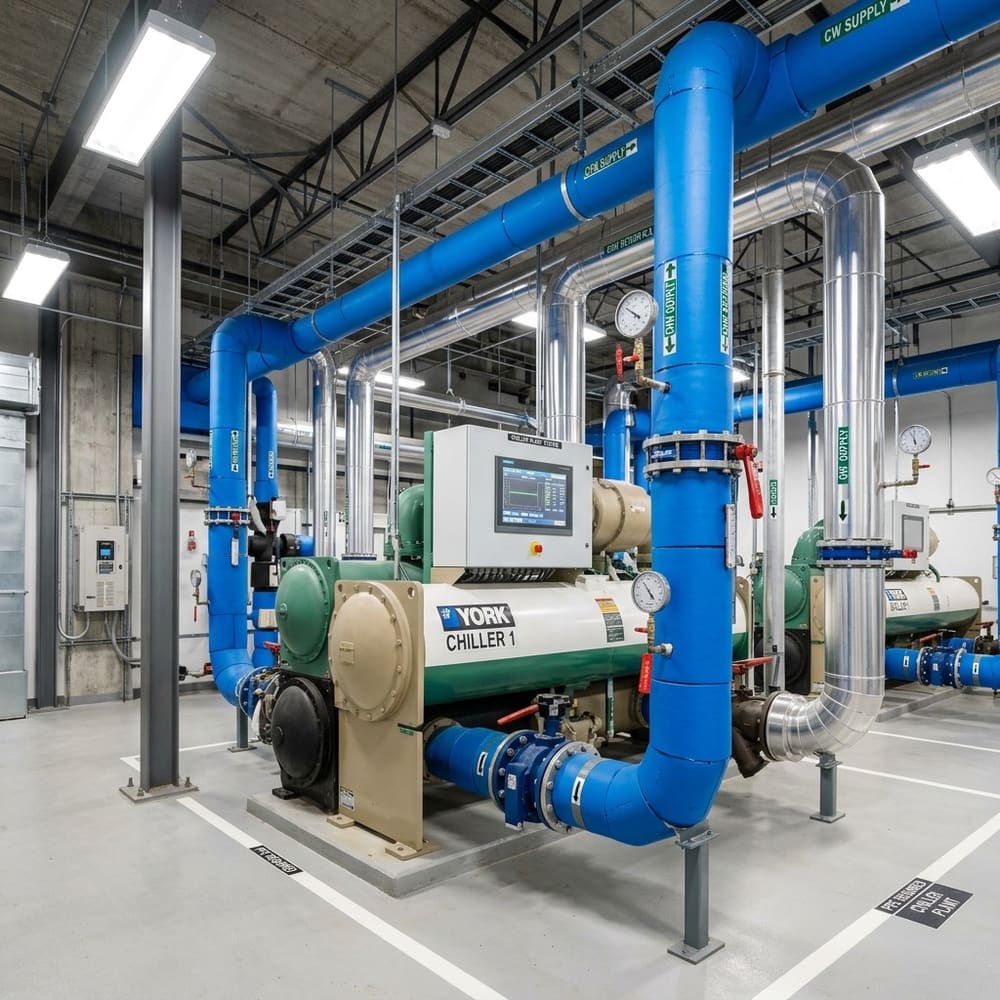
In hospitals, malls, factories and large commercial buildings, the chiller plant can account for a large share of the total electricity bill. It also tends to be the piece of equipment nobody thinks about until it trips on the hottest afternoon of the year.
The good news: most efficiency losses in chiller plants come from a handful of predictable causes. Here are the six habits that make the biggest difference.
1. Keep the condenser tubes clean
In water-cooled chillers, scale and biological film build up inside the condenser tubes. Even a thin layer acts as insulation, forcing the compressor to work harder to reject the same heat. Annual mechanical tube cleaning (brushing) combined with good water treatment is the single biggest efficiency lever you have.
2. Treat your cooling tower water continuously
Cooling towers are open to the air. They collect dust, grow algae and concentrate minerals as water evaporates. Without chemical dosing and controlled blowdown, scale ends up in your condenser. Check water quality regularly, and don't treat dosing as optional during the monsoon.
3. Track approach temperatures
Approach is the difference between the refrigerant temperature and the leaving water temperature. When tubes are clean, approach stays low and steady. When it creeps up, your tubes are fouling. You'll know months before the power bill tells you.
4. Revisit setpoints and sequencing
Many plants run at the chilled water setpoint chosen during commissioning, often lower than needed. Raising the supply temperature by even one degree, where the building load allows it, reduces compressor work. Likewise, check that multiple chillers are sequenced sensibly rather than running two machines at low load.
5. Don't forget pumps, valves and strainers
Clogged strainers, stuck valves and oversized pumps running at full speed all waste energy. Clean strainers during scheduled maintenance, verify valve operation, and consider VFDs on pumps if the plant doesn't already have them.
6. Do an annual health check
Annual chiller plant checklist
- Condenser tube cleaning and eddy current test where applicable
- Compressor oil analysis
- Refrigerant leak check and charge verification
- Electrical panel thermography and terminal tightening
- Safety controls and interlocks tested
- Cooling tower fill, nozzles and drift eliminators inspected
- Insulation on chilled water lines checked for damage and condensation
- Calibration of temperature and pressure sensors
Bringing it together
None of this is exotic. It's disciplined, scheduled work. Plants that follow these habits tend to run longer between failures, use less power, and give facility managers far fewer bad afternoons. We support chiller plants from Dunham-Bush and other major OEMs, from condition surveys to full comprehensive AMCs.
Chillers rarely fail suddenly. They send signals for months. Somebody just has to be writing them down.
Sri Engineering Works service team