
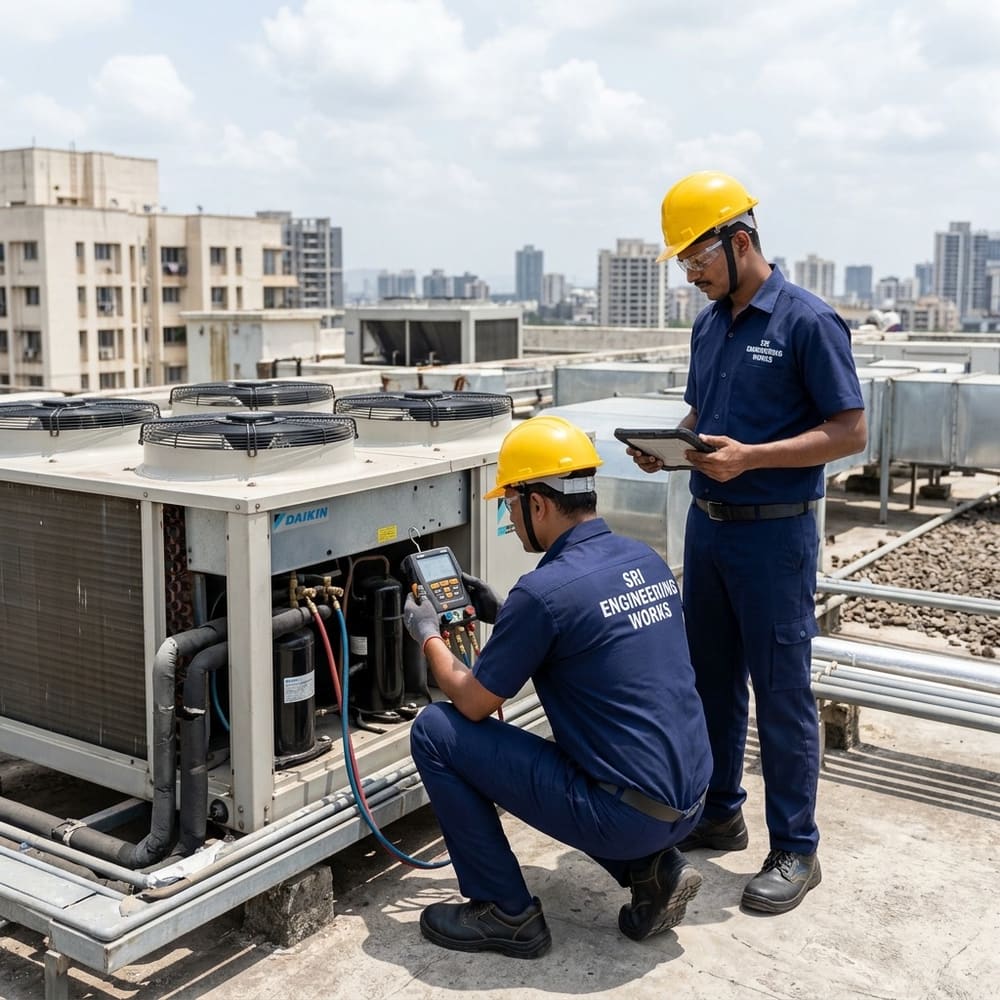
AC Repair & Breakdown Service
Split, cassette, ductable and VRF repair for homes, shops and offices, with the fault explained before any part is changed.
View serviceAn AC does not use up refrigerant, so low gas means a leak. We find it, fix it and recharge to the nameplate quantity.
Refrigerant circulates in a sealed circuit and is not consumed. If your AC has lost its cooling because the gas is low, the gas has leaked out, and topping it up without fixing the leak only buys a few weeks. A real fix means finding the leak point, repairing it, evacuating the system and charging the correct quantity.
We check for leaks with nitrogen pressure and an electronic detector, repair the flare joint, brazed joint or coil leak where possible, vacuum the circuit and charge by weight to the quantity on the nameplate. The amount added is noted on the job card so there is a record for future visits.
We handle R32 and R410A in current units and R22 in older systems, as well as refrigerants used in chillers. If a leak sits in an evaporator or condenser coil and a repair is not reliable, we explain the options before you commit.
Pressure test and electronic detection narrow the leak to a joint, flare or coil.
The circuit is vacuumed before charging so moisture and air do not stay in the system.
Refrigerant is metered on a scale to the nameplate quantity, not guessed from a gauge alone.
Refrigerants are not mixed. We charge only the type printed on the unit.
Gas type, quantity added and readings are written on the job card.
Gold AMC includes refrigerant refills per the plan terms; see the AMC page for details.
| Refrigerants | R32, R410A, R22 (older units); R134a on chillers |
|---|---|
| Leak detection | Nitrogen pressure test and electronic detector |
| Repair types | Flare joints, brazed joints, valves; coil leaks assessed case by case |
| Charging method | By weight, to the nameplate quantity |
| Equipment | Split, cassette, ductable, VRF and chiller circuits |
| Cost | Depends on gas type, quantity and the repair; see the gas refill cost guide |
Low cooling, ice on the pipe, hissing or an oily patch usually point to a leak.
Find the leak point with nitrogen pressure and an electronic detector.
Re-flare, braze or replace the affected part where it is safe and reliable.
Vacuum the circuit, then charge by weight with the correct refrigerant.
Check temperature drop and pressures, and note the quantity added on the job card.
Photos from installations carried out by our teams. Click any photo to enlarge.
Split, cassette, ductable and VRF repair for homes, shops and offices, with the fault explained before any part is changed.
View service
Authorised supply and neat, leak-proof installation of inverter split ACs for homes, shops and cabins.
View service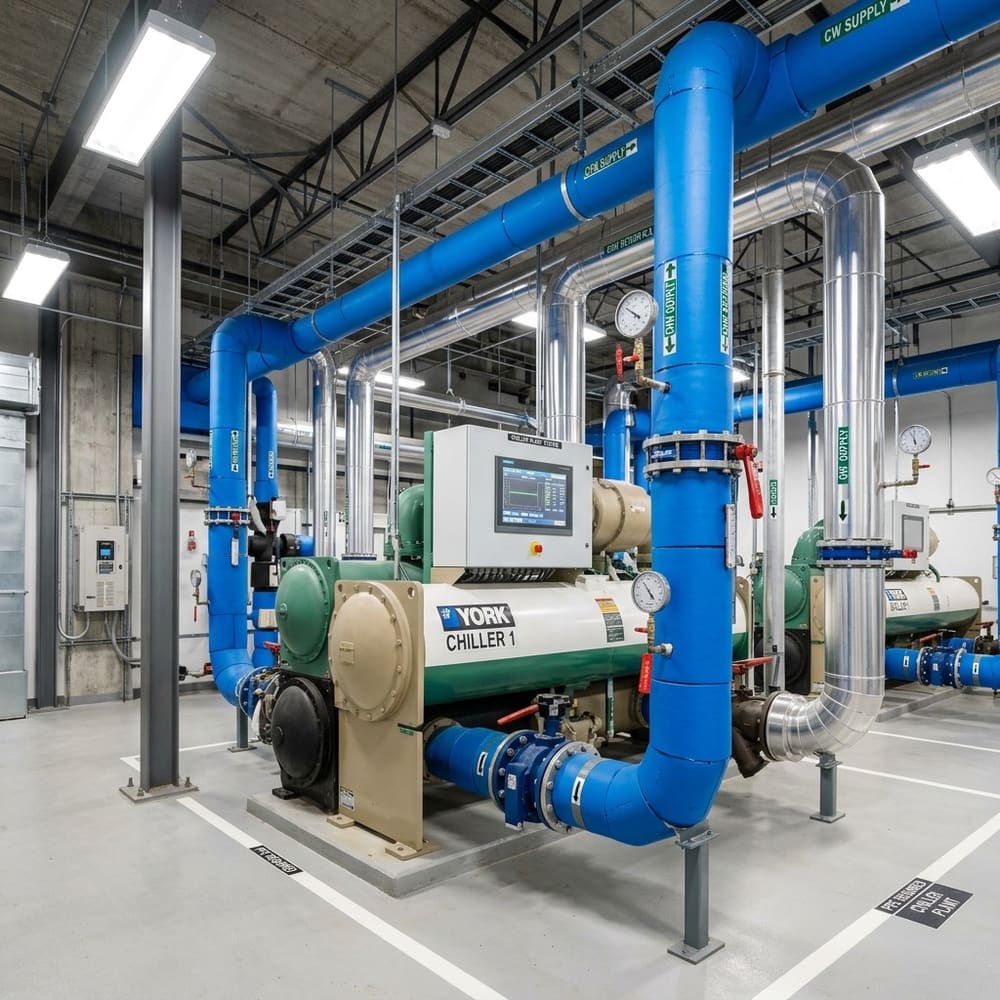
Breakdown repair, descaling and scheduled maintenance for air-cooled and water-cooled chiller plants.
View serviceShare your drawings or book a site visit — our engineers will send a detailed, no-obligation proposal.
Choose which cookies we may use. Essential cookies are always on because the site can’t function without them. You can change this anytime.
_ga / _ga_* cookies.