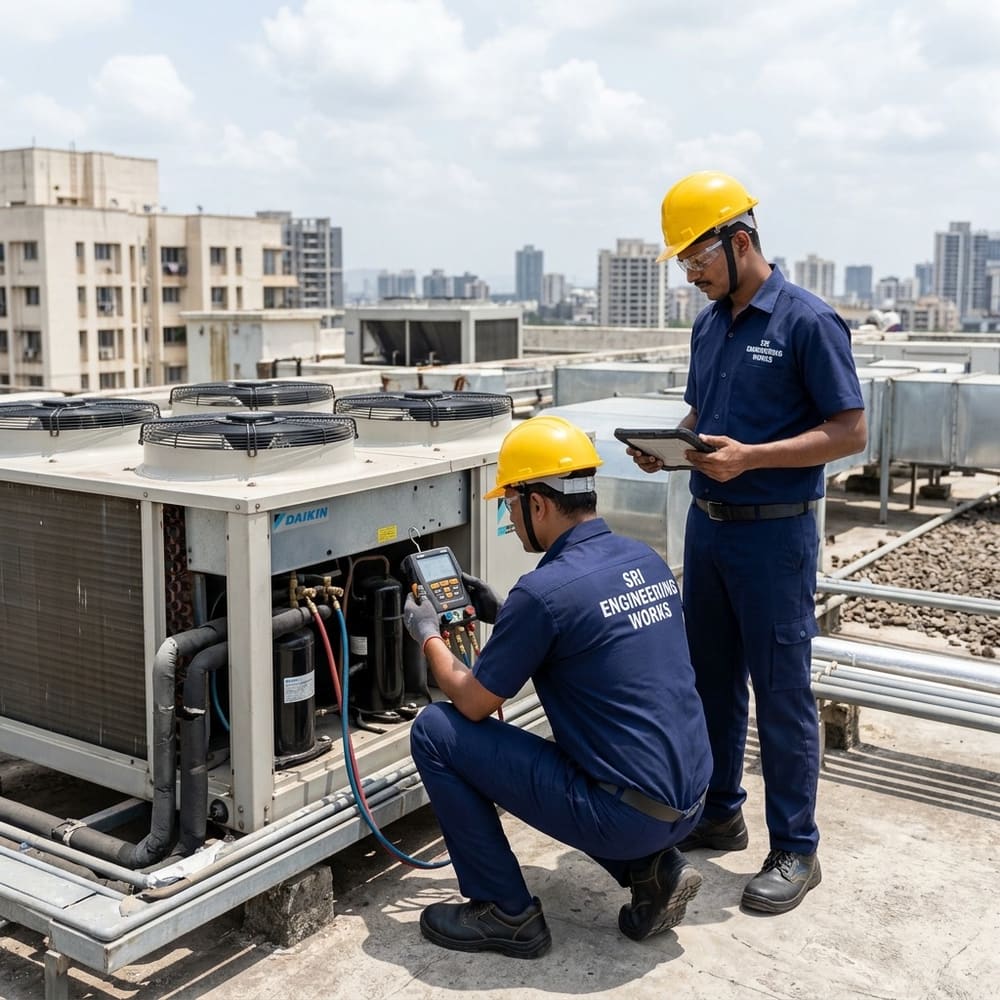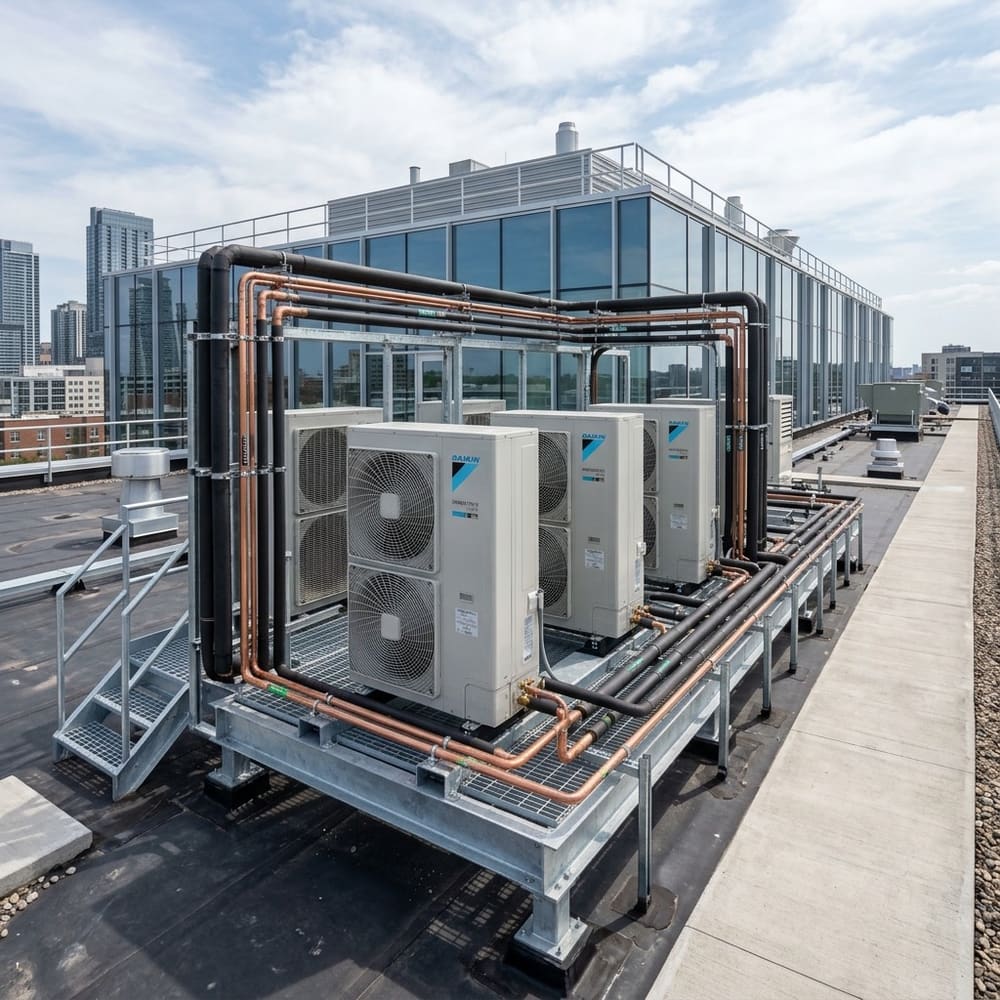

The short version
- 1Refrigerant circulates in a sealed loop. If it's low, there's a leak. Full stop.
- 2A proper repair is: find the leak, fix it, pressure-test with nitrogen, vacuum, then recharge by weight.
- 3Mixing refrigerant types or 'topping up' an inverter AC by guesswork can damage the compressor.
- 4Most leaks are at flare joints, which are quick and affordable to fix once found.
Of all the AC myths out there, this is the one that costs people the most money: the idea that AC gas gets used up and needs a yearly top-up, like engine oil.
It doesn't. The refrigerant in your AC travels in a closed, sealed loop. It turns to gas in the indoor coil, carries heat outside, turns back into liquid in the outdoor coil, and repeats. That same refrigerant can do this for fifteen years. If your AC needs gas every summer, it's leaking every summer.
How to tell if your AC is low on refrigerant
- Cooling has been getting weaker gradually over weeks, not suddenly.
- Frost or ice on the thin copper pipe at the outdoor unit or on the indoor coil.
- Hissing or bubbling sounds near the pipes.
- Oily stains on pipe joints (refrigerant carries compressor oil with it as it escapes).
- Higher electricity bills for the same usage.
Where leaks usually happen
In our experience with split and cassette systems, leaks cluster in a few places:
| Location | Why it leaks | How common |
|---|---|---|
| Flare nut joints | Poorly made flares or over/under-tightening at installation | Very common |
| Indoor coil (evaporator) | Formicary corrosion from moisture, chemicals, household fumes | Common in older units |
| Pipe rubbing against wall or edge | Vibration wears through the copper over time | Occasional |
| Service valves | Worn valve cores or missing caps | Occasional |
| Outdoor coil | Coastal salt air (Vizag, Kakinada) and pollution | Common near the sea |
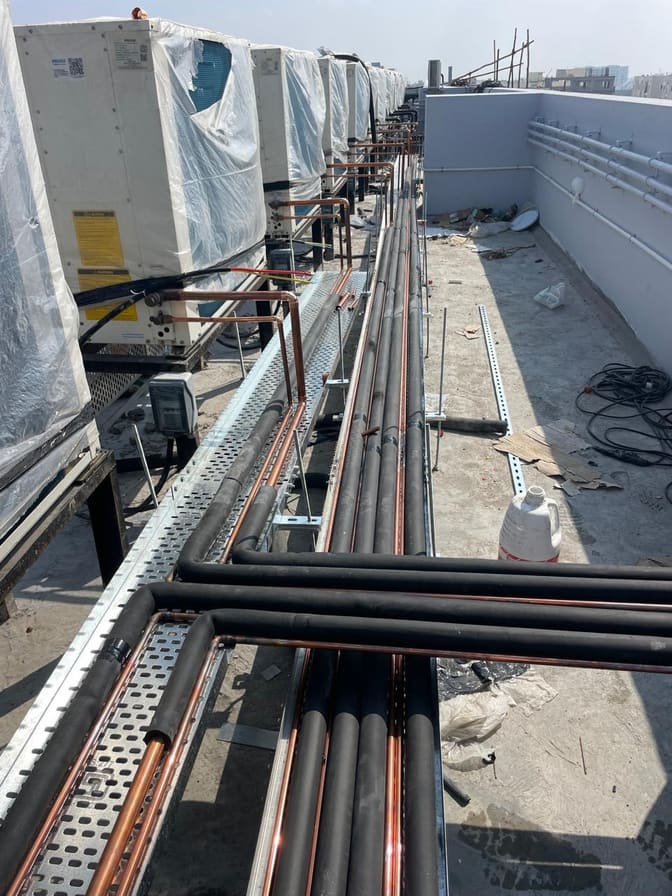
What a proper leak repair looks like
This is the process we follow. If your technician is skipping steps, it's worth asking why:
- Recover any remaining refrigerant rather than venting it.
- Locate the leak with soap solution, an electronic detector, or nitrogen pressure.
- Repair it by re-flaring, brazing, or replacing the coil if corrosion is widespread.
- Pressure-test with dry nitrogen and hold it for a period to confirm the fix.
- Vacuum the system to remove air and moisture. Moisture inside an AC turns into acid over time.
- Charge by weight with the exact refrigerant and quantity on the unit's nameplate.
Is it worth fixing on an old AC?
If it's a flare joint leak, almost always yes. It's a small job. If the indoor coil is corroded through on a 10-year-old R22 unit, the maths changes: coil replacement plus recharge can approach the cost of a new, far more efficient inverter AC. We'll give you both numbers and let you decide.
We'd rather spend an extra forty minutes finding the leak than come back next May and top it up again.
Sri Engineering Works service desk