
The short version
- 1'Ton' measures cooling capacity, the heat removed per hour, not the weight of the machine.
- 2Room area is only a starting point. Sun exposure, top floors, glass, people and appliances all change the answer.
- 3Oversized ACs cool fast but leave the room clammy; undersized ACs run forever and never catch up.
- 4When in doubt, get a heat-load assessment. It takes a few minutes and costs far less than the wrong AC.
First, a quick bit of history: a 'ton' of cooling is the amount of heat needed to melt one ton of ice in a day. In today's terms, 1 ton ≈ 3.5 kW of cooling capacity. It has nothing to do with how heavy the AC is.
So when you pick a size, you're really answering: how much heat does this room gain on a hot afternoon, and how much capacity do I need to remove it?
The rough starting point
| Room size | Typical starting capacity | Go bigger if… |
|---|---|---|
| Up to 120 sq ft | 0.8–1 ton | Top floor or west-facing |
| 120–180 sq ft | 1–1.5 ton | Large windows, 3+ people |
| 180–250 sq ft | 1.5 ton | Top floor, kitchen nearby, lots of glass |
| 250–350 sq ft | 2 ton | Open-plan with high ceilings |
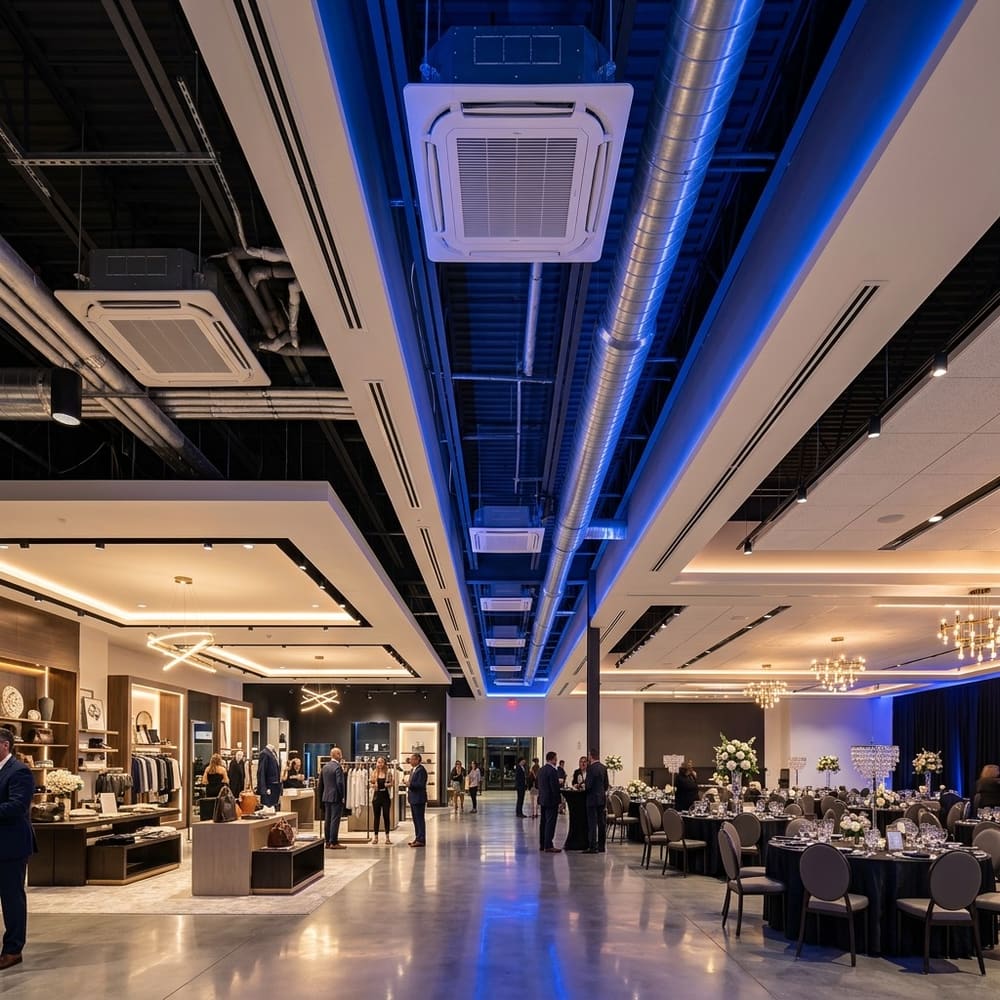
| 350+ sq ft | Multiple units, cassette or ductable | Always get a load study |
What changes the answer
- Top floor with a concrete roof: the roof bakes all day and radiates heat into the evening. Often needs a step up in capacity.
- West or south-facing walls and glass: afternoon sun is a big heat source.
- Number of people: each person adds heat, which matters in offices, clinics and living rooms.
- Appliances and lighting: computers, TVs and kitchens next door all add load.
- Ceiling height: double-height spaces have far more air to cool.
- Insulation and shading: well-shaded rooms with sealed windows need less.
Why bigger isn't better
It's tempting to buy one size up 'to be safe'. The problem is that an oversized AC cools the air so quickly that it switches off before it has removed enough moisture. The room hits the set temperature but feels cold and clammy. It also cycles on and off more, which wears components and wastes power.
Too small
- Runs continuously on hot afternoons
- Never quite reaches set temperature
- Higher bills, faster wear
Too big
- Cools fast, but the room feels damp
- Frequent on-off cycling
- Higher purchase cost for no benefit